UPDATED: January 2026
Steps for Getting Help
Focus. Commit. Act.
After folks read Machaelle's answer to your collective "Why?" following the 2024 U.S. election, there were more questions. So we reminded everyone of the steps to get help that Machaelle gave us in The Mount Shasta Mission.
The questions now fall more into the "What can I do about this?" category.
As we watch critical government services and programs being wiped out, upending the lives of the people who depend on those jobs and the folks who depend on those programs, and in some cases also seriously affecting our environment — many of us are scrambling to respond. What can we do in this time of government upheaval to be helpful and useful, to protect the ideals, values, planet and people that matter to us?
We're not talking about big, flashy actions. We're talking about daily life matters. The seemingly "little" stands we take to stem the slippery slope toward chaos.
A Brief Background
In 1985, the Cottage Government/Military Team went through a great deal of effort to set up a global gridwork for making available their body of information to us.
The Mount Shasta Mission describes the work that went into this setup. If you are curious, the book is available in softcover and ebook editions.
But you don't have to read the entire book to use this communication system effectively. The team insisted that the gridwork setup be simple and easy for anyone to link into at any time.
S tart with where you are right now. What are your concerns for you and your family, your business and your immediate community? That's where we can each have the most impact.
If you are currently in a position to more directly affect what is happening within the U.S. government and military structures, you can apply these steps to your work there as well.
Also, as Machaelle noted in her "Why?" message, the Team does not limit this service to just the United States. It addresses the government/military activity in all countries and with every group of people who function within their own government/military guidelines. It's all connected.
Using this set-up to ask for help, you'll have the wind at your back.
The Three Steps
 1. Focus on a government or military issue, problem or crisis.
(If you are having trouble thinking of something, get a list of the government agencies with a description of their responsibilities, or read today's news.)
State: "I wish to focus on the Cottage Team government/military communication gridwork and get information around the following concern: __________." (State your concern — succinctly.)
2. Commit to finding new solutions.
State: "I'm open to new solutions about this concern and I wish to receive them through intuition, dreams, articles, reports, sudden opportunities and conversations with others."
3. Act
Every time you get an idea or run across new and interesting information pertaining to your stated concern, write it down. It's your working list. Then choose where you'd like to start, act on those ideas and apply the new solution(s). Return your focus to the gridwork any time you have questions, feel stuck, need help or just need more input. The ideas and input you receive are tailored to you personally based on the concern you have articulated. You may be receiving input immediately or over the next few days, weeks, months and even years, depending on the issue.
The Food You — or Anyone Else — Will Eat
If you are concerned about food safety as the dismantling of government agencies reduces or removes food protections:
Focus on the issue. Your help will come in the form of food supply ideas that pop into your mind or opportunities that come your way.
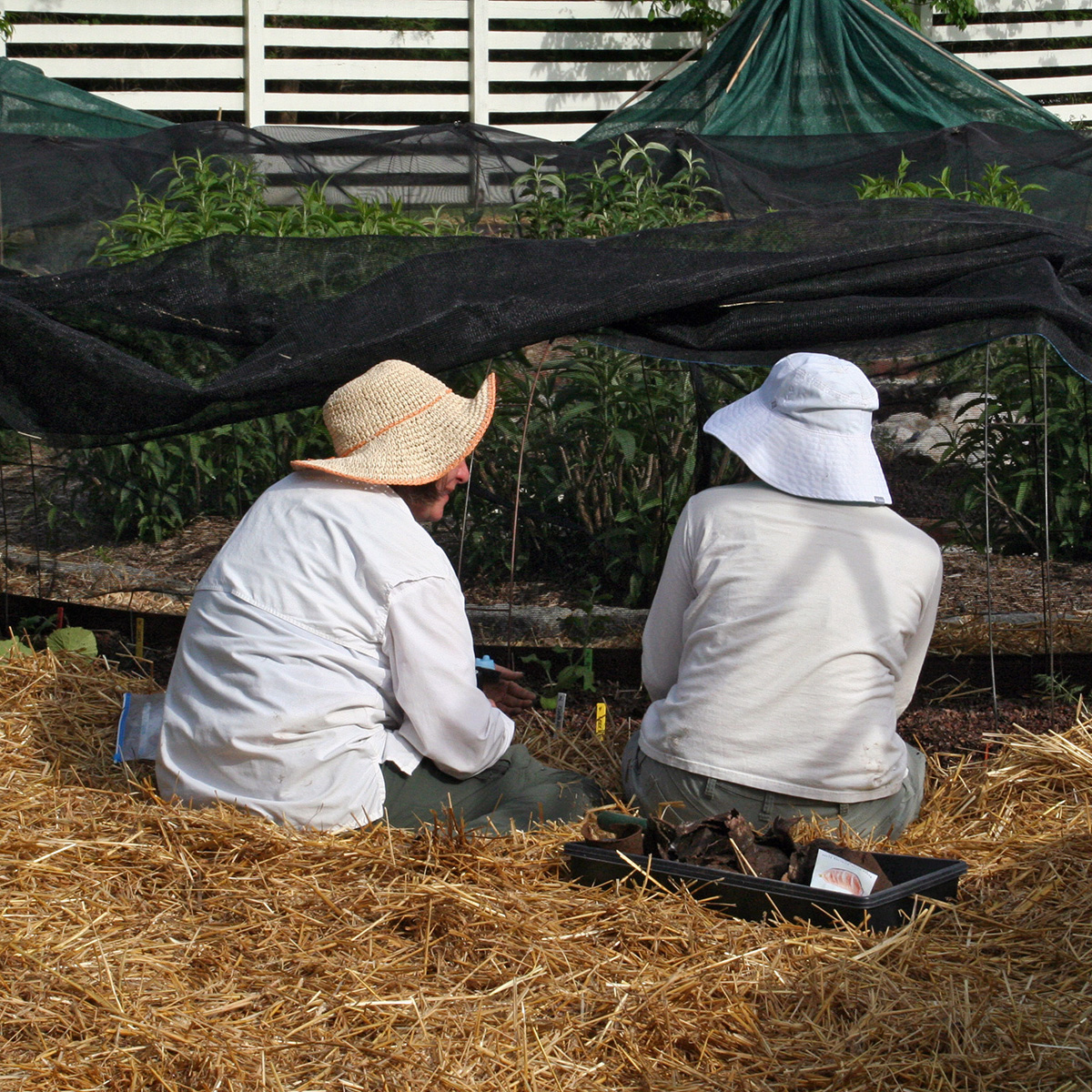
Perhaps your ideas will include starting a vegetable garden for your family, or getting to know the small farmers in your community and asking about their practices, or you might think about starting a community garden on an empty lot in your city, or joining one that exists. You might consider starting a small farmers market where there is a “food desert” in your city. Or if you work or volunteer in a school, organizing a field trip to a local farm, or connecting local farmers to your school, to provide fresh vegetables for school lunches.
The Government Agency and Service To Which You've Dedicated Your Life
If you the government agency where you have worked for years is suddenly being dismantled and you are now out of a job or your job is at risk:
Focus on this, and commit to finding solutions. Then write down any ideas and information that pops up, choose your starting point and begin to act.
Perhaps you have colleagues with similar concerns and decide to meet for coffee outside of work, to share your worries and brainstorm ideas on how you can continue to serve others with your experience and knowledge if your jobs are taken away. Perhaps you'll get an idea for how to continue to serve in the agency and have an impact on which changes are made and which services are maintained. Perhaps you'll get ideas for other kinds of work that would make you happy, provide a source of income and make good use of your knowledge. Perhaps your ideas will include setting up your family finances for the worst-case scenario of losing your job.
The Books You, Your Community and Others Can Read
If you are concerned about book banning in your school library:
Think about it with a willingness to address the issue. Record your ideas, thoughts and dreams. This focus and willingness opens you to the options and ideas for how you can address the problem. Choose your starting point and act on it.
Maybe you start going to school board meetings, support someone who wishes to run for the school board, or you run for the position. Or perhaps you have an idea for starting a personal library of banned books in your home or business and you make the books freely available to others in the community who don't have access. Maybe you volunteer at the library or ask the librarian how you can help them keep the library a safe place and how you can support them personally as they address threats to their well-being. Maybe you volunteer in the school classroom, help children learn to read and share your love of books and storytelling.
Other Issues You Might Address
Healthcare
Your access to medicine, the quality of your medical care, insurance costs and coverage, ability to make health and life-saving decisions with your doctor . . .
Money
Your investments, taxes, mortgage, rent, salary, retirement, social security . . .
Environment and Infrastructure
Road safety, air pollution, access to clean water, trash and waste disposal and the toxic waste that the factory near your neighborhood might be dumping . . .
 It's likely that you are deeply concerned about more than one issue. We can't address everything all at once. Choose one issue that matters very much to you and focus on that. Commit to finding solutions. Then act. As you feel ready, add other issues. But be careful not to overwhelm yourself.
The power of the individual is greater than you think. It doesn't require just one big act to turn this ship. It requires a gazillion small, meaningful actions from enough of us individuals.
Evolution is the combined result of everyone's choices. As a dear friend says to his daughter every day on her way out the door: Make good choices!
 Resources and Added Insight
We all have a stake in our government systems — local, national and worldwide. There are many ways to be involved in ways to improve our government/military systems, to stand up for what matters to you and to help make a better life for all of us.
To learn more about gatherings and planning sessions, and look into opportunities to speak up and take action on what matters most to you, go to Indivisible.org.
To learn what kinds of actions are most effective and gain a better understanding of current worldwide events through plainly explained historical context, read the concise On Tyranny: Twenty Lessons from the Twentieth Century by Timothy Snyder.
This CBC News interview with Snyder (May 29, 2025) will help you understand why we’re recommending the book. This isn't just about what's happening in the U.S. right now.
"There are a lot of other terrible things going on in the world. The problem that we're facing is everywhere."
"When you're under the pressure of authoritarianism, it's coming at you in the sort of 21st century post-modern way. You're overwhelmed and the overwhelming character of it is part of the process. Because there's nothing in the everyday you can get hold of that can actually help you. Whereas, if you have a sense of what happened in the 20th century, especially from the point of view of people who patiently created conceptual categories, found ways to resist — that's actually helpful."
~ Timothy Snyder