UPDATE: July 2026
Let's Talk About Parasites
Right off the bat, we'll acknowledge that talking about parasites makes most folks uncomfortable. And when it comes to parasites, usually what first comes to mind are major concerns that make the news. There are plenty to choose from. Here are three U.S. examples:
Ticks Are on the Move. Here Are the Risks in Your Region. [NYT, July 2026]
‘Lettuce or Salad Greens’ Identified as Potential Source of Cyclospora Outbreak [NYT, July 2026]
West Nile virus season starting early, highest number of infections reported at this point in year since 2004 [CDC, July 2026]
 What is a parasite anyway?
It's an organism that lives on or in a host organism and gets its food from or at the expense of its host. There are three main classes — protozoa (microbes), helminths (worms), and ectoparasites (insects and arachnids).
The more we learn about them, the more clear it is that parasites are a natural part of a balanced environment! The keywords there are balanced environment.
Some are just interested in animals or plants or soil. Some really dig humans (pardon the pun, couldn't help ourselves!). Some are attracted to a variety of hosts, depending on a variety of factors.
We can be exposed, and our animals can be exposed and not have a problem. But if the body is out of balance and doesn't have the wherewithal to address the presence of parasites on its own, we can get into trouble.
The goal is to support and strengthen the body’s balance (or Fido’s or Fluffy’s balance).
 When we have animal companions in our home or animals on our land, we have a higher level of exposure. (People aren't innocent in this one either. We can also can expose our animals.)
Other scenarios and situations that would call for shoring up in light of these concerns:
➺ You work or teach in an elementary school or daycare
➺ You’re in the military, in the field
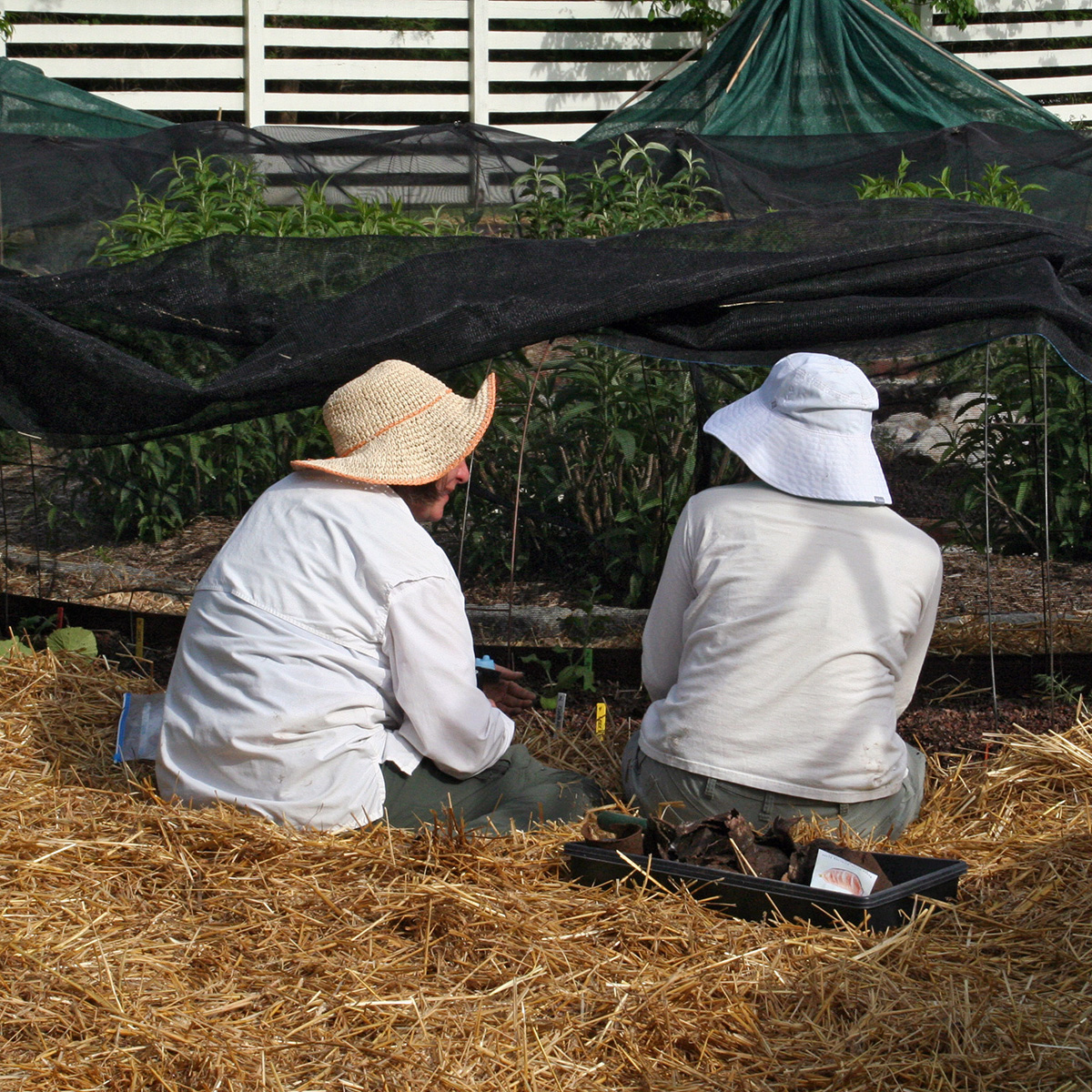
➺ You’re in any job that puts you in a field
➺ You’re a hunter
➺ You volunteer at an animal shelter or rescue center
➺ Your grandchildren love the playground
➺ You are a veterinarian, or vet tech or a farrier
➺ You swim in (or fish or boat on) lakes and ponds and rivers
➺ You travel
➺ You work outdoors or spend a lot of your free time outdoors
➺ You are a farmer or work in the farm industry, or meat packing industry
➺ You work in a restaurant or a deli or a butcher shop
➺ You have toddlers and/or young children
➺ You and your pooch spend time at the dog park
➺ You live in a highly populated city
➺ You work in sanitation or the cleaning industry
➺ You participate in disaster recovery, search and rescue
➺ You live in an area that floods often
➺ You're a health care worker or EMT
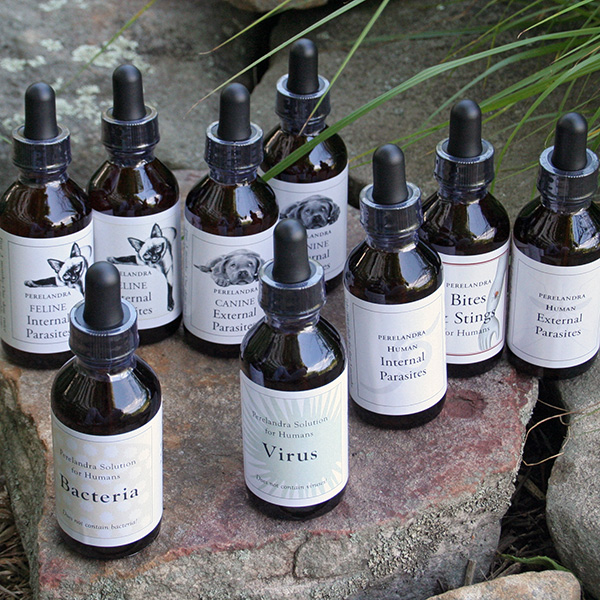 The Perelandra Solutions are easy to use, and safe for anyone at any age — adults, including when pregnant or nursing, and children. The instructions are simple.
Start by taking the Solution twice daily for the first three months, one dose in the morning and one dose in the afternoon. This will help you build up and provide a strong foundation of balance. After three months, follow the guidelines in the brochure.
Wait 10 seconds between each Solution if you're taking more than one. Don't dilute the drops. And don't eat or drink 15 minutes before and after taking the Solution.
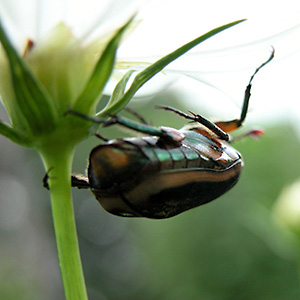 One more thing to think about . . . When you have a balanced garden environment, there are insects and microbes and worms present. They are present in balanced numbers and enhance the health of the whole garden biosphere.
The body is a garden, and it contains all manner of microbes, sometimes the parasite-type. The key is to maintain its balance and have all that lives within enhance your health.