Revised: February 2026
Gardening Series, Part 4
Plotting Your Garden Layout
The next step in your nature partnership, for balance and strength.
 Pan on Creating a Garden Environment
The Perelandra Garden Workbook, pp.140-141
It might simplify your understanding of the planning stage if you saw your garden as a fine, delicate, gourmet soup in which the eventual success of the soup depends on the lightest and most careful of touches. A pinch of salt would add to the perfection, but a pinch and a half would break the delicate balance the chef attempts to create and reduce his soup to an ordinary, perhaps even unpalatable experience.
When we work with you to consciously create a garden environment, we approach the task with the lightest of touches so as not to tilt the balance at any given moment. A specific crystal placed in one position may be the perfect pinch of salt, in another position it is the pinch and a half. This applies equally to everything placed into the garden, be it mineral, vegetable or animal.
We encourage you to read the full insight from nature for perspective on why you are asking for nature's help with plant (and mineral and other) placement in your garden. And it will help you better understand the long game. It also applies to soil-less gardens!
 Ready to go?
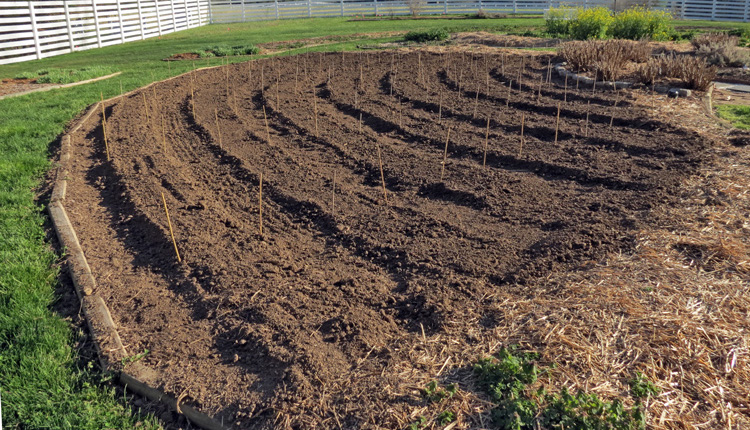
Do you have your seed and plant lists completed? Great! Get them out, along with your drawing of your garden's shape and size.
You are now going to work on the layout of your garden with your nature partner. With this step, you'll begin to visualize the garden coming together.

 A Tip for Clarity
Take a moment to re-read your garden DDP before you begin each garden session. It will get you focused on your goal and remind you why you are getting this information. This adds clarity to your partnership. The clarity of nature's input is a direct reflection of the clarity of your input.
Now you're ready to plot the layout of your garden!
 Now you're ready to plot the layout of your garden!
Keeping it simple: Follow the instructions for Gut Gardeners.
If you use PKTT and wish to take your partnership up a notch, follow the steps for 2.0 Gardeners.
Gut Gardeners
You'll begin by reading a few pages for added understanding on how to proceed in your Gut Garden. Start at the second paragraph on page 25, "Moving on from here in partnership," and read through the end of page 27. (Skip the "Soil" paragraph for now, we'll come back to that.)
Next, think about your garden layout. Where are you going to put those seeds and plants you listed, so you have a strong and balanced garden?
If you need ideas on how to proceed, read pages 127-129. You don't have to get as detailed, but it will give you a starting point for determining your garden layout.

2.0 Gardeners
Read the opening paragraph on page 127. If your garden is all one "section" and not divided into parts, skip to page 129, read it and refer to the chart. Then set up the chart for your garden and find out where your seeds and plants need to go, for strength and balance.
If your garden has more than one section, continue reading page 127 and refer to the chart on page 128. Do that step. When you finish, you'll move on to page 129.
You may want to break this up into two or more sessions, depending on the size and number of sections in your garden.

Anytime you have a question about co-creative gardening and would like help to figure it out, or if you feel overwhelmed or get stuck, call our Question Hot Line. We will encourage you, get you unstuck and help you keep it manageable and simple.
Question Hot Line
1-540-937-3679
Wednesdays, 10-8 ET