March 2019
PIC for Animals
What you should know for your pet snake, the family dog, a ranch full of horses and cattle, or any animal in your care.
Did you know that when using PIC List Testing for your animal(s), you don't have to put a single drop of a Perelandra Essence or Solution into the animal's mouth?
With PIC List Testing, not only will you have the precise, personalized combination of Perelandra bottles needed to address your companion animal's general health and balance, or a specific new or chronic issue, but you also won't have to figure out how to get them to take those drops. Instead, you'll work with nature through the Perelandra Information Center (PIC) to administer the drops using a "nature shift."
You don't need any special skill or class to do this for your animals. You don't have to use PKTT (kinesiology / muscle testing) either, but you can. Also, you do not need to have every bottle with you to start PIC List Testing.

What you will need is:
- to follow the steps in the PIC Brochure,
- about 15 minutes on test day,
- about 5 minutes twice a day to administer the drops during the dosage period,
- a clean plate or tray,
- whichever bottles test positive,
- your focus,
- and the animal(s) you're going to test!
From the Perelandra Information Center (PIC) Brochure by Machaelle Wright, on PIC and Companion Animal Health:
This is simple and I think You'll be pleased with the results. Use the steps for Surrogate PIC List Testing. List the animal's name in the focus line and then a brief description of the problem and test the List.
Remember that PIC does not eliminate a vet's attention for additional needed care. If your animal is receiving vet care and is in the hospital, focus PIC testing on recuperation and recovery once he is back home. See pp. 23-24 of the Brochure for complete instructions.
Testing More Than One Animal
You can literally use PIC List Testing for any animal in your care — dog, cat, horse, iguana, chinchilla, tarantula, rabbit, guinea pig, turtle, fish, goat — you name it.
When you have a pack full of dogs, a coop full of chickens, a house full of parakeets, a stable full of horses or a yard full of goats, how do you know whether to test them individually, and when it's effective to test them as a group?
Companion animals such as dogs, cats, guinea pigs, snakes, etc. that live in your home need to be tested individually. For groups of animals in your care, how they are treated depends in some part on the situation and on the type of animal.
Here's one example: If you have a stable full of horses, and You're concerned about something like equine flu, you would need to test each horse separately. Once humans interact with them, even if you have ten horses, they are treated as individuals, known for their individual habits and personality. Only a herd of wild horses or the Chincoteague ponies can be treated as a unit.
Another example: If you have a flock of backyard birds or a passel of hogs or a herd of goats, and one of them managed to get your attention so much that it's earned individual distinction and somehow now lives in the house (this happens, we know!), you would test your indoor bird or hog or goat separately. The outdoor flock, passel or herd would continue to be tested as a group.
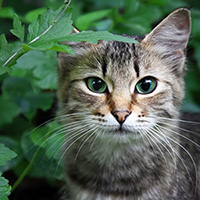
If you choose not to use PIC List Testing for your animal(s), but you would like to know which Perelandra Solutions for animals would be most helpful, you can ask the PIC Classroom. You would identify the animal and the issue, and ask about the Solutions normally used with animals. In this case, you will follow the "normal use" instructions in the product's brochure.
Just as you would gain insight on what You're using for yourself, you can also ask the PIC Classroom (pp. 7-9 of the Brochure) to help you better understand how those Perelandra Solutions are supporting your animal's health.